The short version
- Aim for 30 to 40 percent in winter and around 50 percent in summer. It is a range, not one setting, and it moves with the weather.
- In winter the windows decide the ceiling. If they stream or frost up, the house is too humid for how cold it is outside, whatever the number says.
- In summer the air conditioner is the dehumidifier. It only dries the air while it is running, so short cycling leaves a house cool and clammy.
- Start with habits and a cheap meter. Equipment comes after you know what the house actually does.
The humidity level a house should sit at
Relative humidity is how much moisture the air holds compared with how much it could hold at that temperature. Indoors you want a range rather than one setting, and the range moves with the season.
Health Canada's guide to moisture and mould indoors puts the target at 30 to 50 percent, and says to dehumidify where condensation forms on cold surfaces or the reading climbs over 50. Ontario's Save on Energy splits it by season: 30 to 40 percent in winter and 50 to 60 percent in summer.
- Winter, roughly November to March: 30 to 40 percent.
- Summer: around 50 percent, a little higher is fine on a muggy week.
- Over about 55 percent: mould and dust mites do well, so this is the side to stay off.
- Under 30 percent: static, dry skin, sore throats and shrinking trim and flooring.
Most Mississauga houses swing across that whole band in a year. They are too dry in February and too damp in July, which is why one fixed setting on a humidistat does not work.
How to find out what yours is
Guessing from how the air feels is not reliable. You need a reading, and a hygrometer from a hardware store is accurate enough for this.
- Measure in a room you actually live in, away from the kitchen, the bathroom and any outside door.
- Check the basement separately. It is usually the dampest part of the house in summer.
- Take one reading on a cold morning and one on a muggy afternoon. The two numbers are the ones that matter.
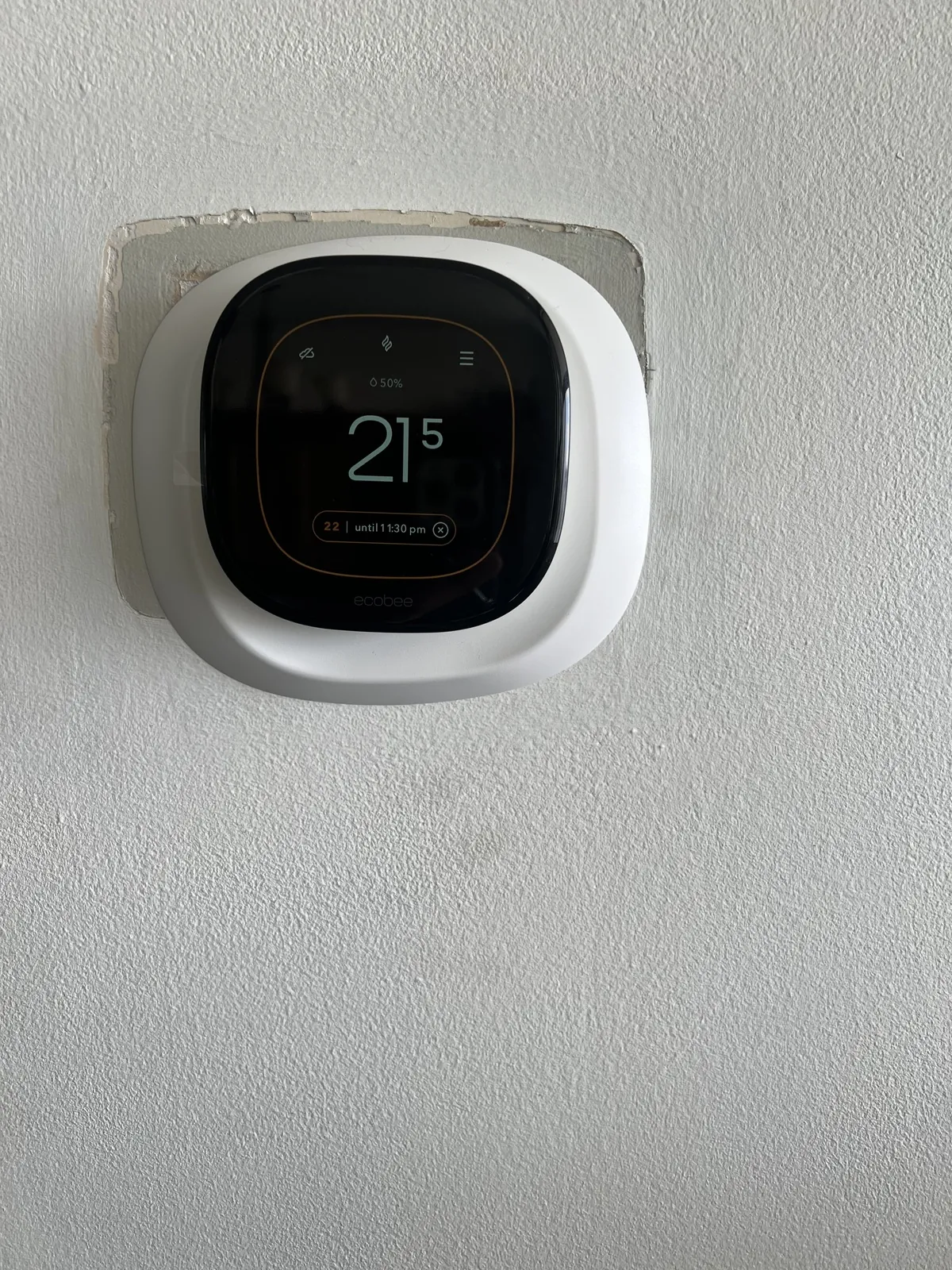
- A smart thermostat will show you the humidity, but most of them cannot control it. The reading is the useful part.
Older wall humidistats drift. If the dial on the furnace says 35 and a meter in the hallway says 50, trust the meter and have the humidistat looked at.
In winter, the windows set the ceiling
Window glass is usually the coldest surface in a heated house, so moisture condenses there first. That makes your windows the honest test. Streaming glass or frost on the inside means the air is too humid for how cold it is outside, even if the meter reads 35 percent.
The colder it gets outdoors, the lower the indoor ceiling drops. The ASHRAE table published by the US EPA gives the pattern.
| Outdoor temperature | Keep indoor humidity no higher than |
|---|---|
| About minus 7 C | 35 percent |
| About minus 12 C | 30 percent |
| About minus 18 C | 25 percent |
| About minus 23 C | 20 percent |
| About minus 29 C | 15 percent |
Wet windows in a cold snap
Turn the humidifier down a step, open the curtains and blinds so warm air reaches the glass, and wipe the sills dry. Condensation left sitting on a wooden sill rots it, and the stain shows up long after the cold snap has passed.
The other winter trap is a house that is sealed tight. New and renovated homes hold moisture in, so showers, cooking and laundry push the number up with nowhere for it to go. An HRV swaps that damp air for fresh outdoor air and keeps most of the heat while it does.
In summer, the air conditioner is the dehumidifier
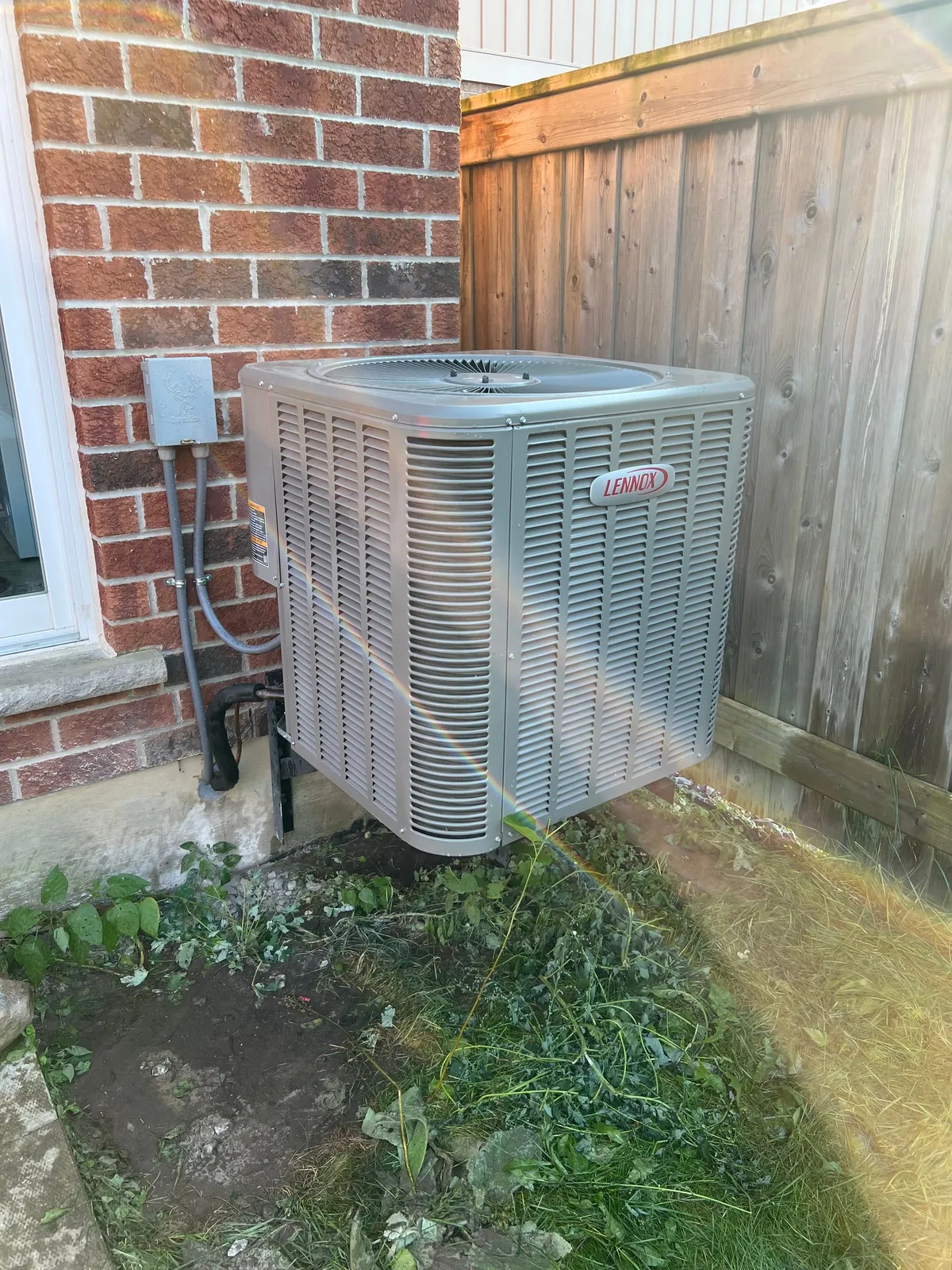
Cooling and drying are the same job. Warm air passes over a cold coil, moisture condenses out of it and runs down the drain. That is why a working air conditioner lowers humidity in the house as a side effect of cooling it.
The catch is run time. The system only dries the air while the fan and compressor are running. An oversized unit cools the thermostat quickly, shuts off, and never runs long enough to pull much water out. The house ends up cool and clammy at the same time, which people usually blame on the thermostat.
- Run the bathroom fan for at least 30 minutes after a shower. Health Canada's figure, and most people switch it off far too early.
- Use the range hood when you cook, and make sure the dryer vents outside rather than into the basement.
- Put a dehumidifier in the basement if it reads over 50 percent. A furnace cannot remove moisture on its own.
- Check the condensate drain. A blocked drain or a full pan means the water the system pulls out is going back into the house.
If the house is still damp with the air conditioner running properly, the next thing to look at is airflow. A clogged filter cuts the air moving over the coil, and our furnace filter guide covers how often to change one and which thickness suits your system.
The fixes, cheapest first
- Habits and a meter. Exhaust fans, the range hood, a dryer vented outside and a hygrometer in the hallway. This costs almost nothing and solves a surprising number of complaints.
- A dehumidifier for the damp side. A portable unit in the basement handles summer moisture that the cooling system never reaches.
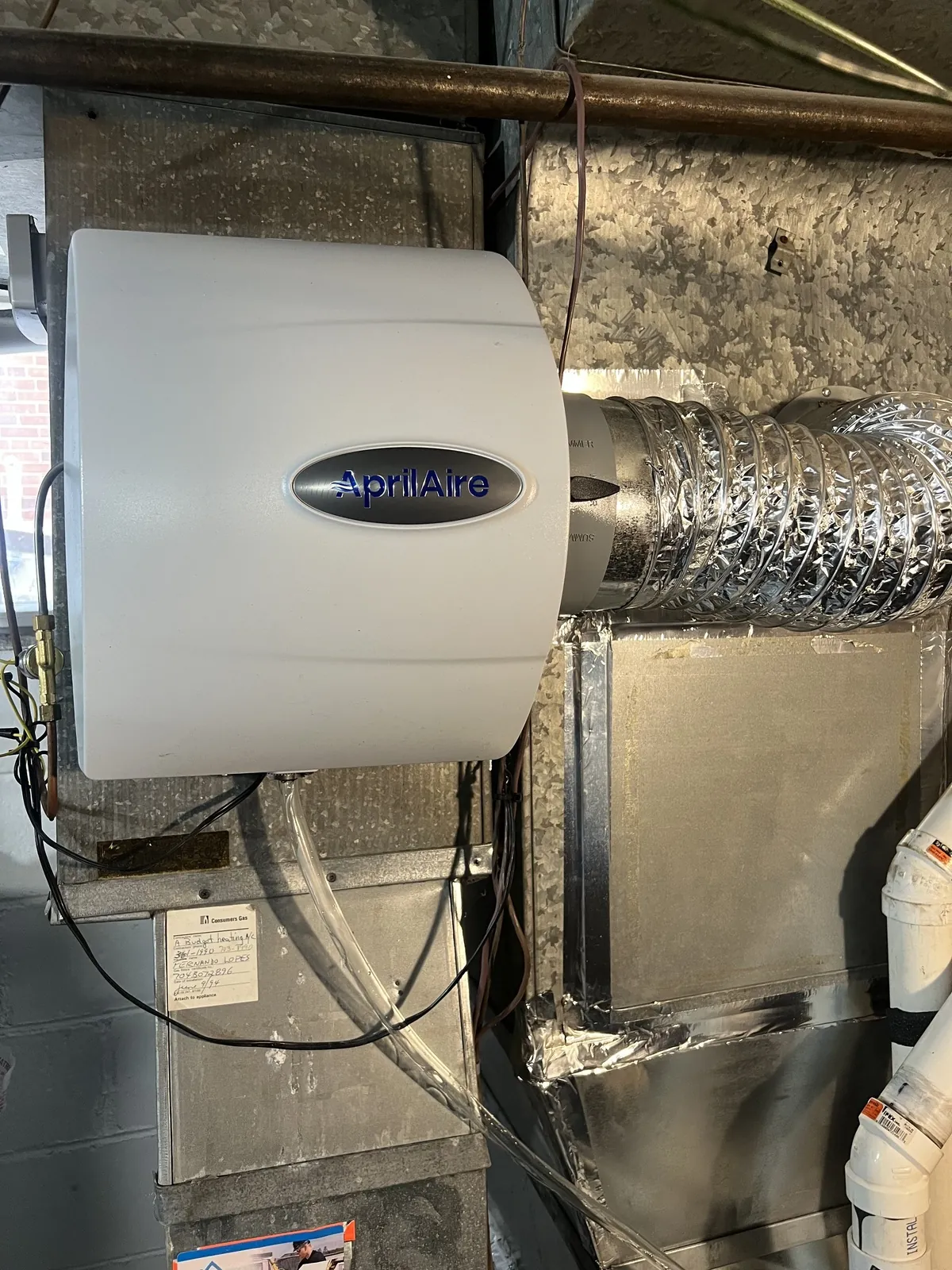
- A whole-home humidifier for the dry side. On our pricing list a humidifier is $650 + HST installed, or $800 + HST for the larger model, and it is set up with a humidistat so it adds moisture only when the house needs it.
- Ventilation for a tight house. If the windows run wet every winter and the air feels stale, a heat recovery ventilator deals with the cause rather than the symptom.
- Right sizing, when the equipment is being replaced anyway. A cooling system sized from a proper heat loss and heat gain calculation runs longer and drier than one picked off square footage.
None of this needs doing at once. Get the reading first, fix the habits, then spend money only on whichever end of the range your house actually sits at.
If you are not sure which end that is, tell us what your meter says on a cold morning and what the windows do, and we will tell you what we would do in our own house. The price is agreed in writing before any work starts.