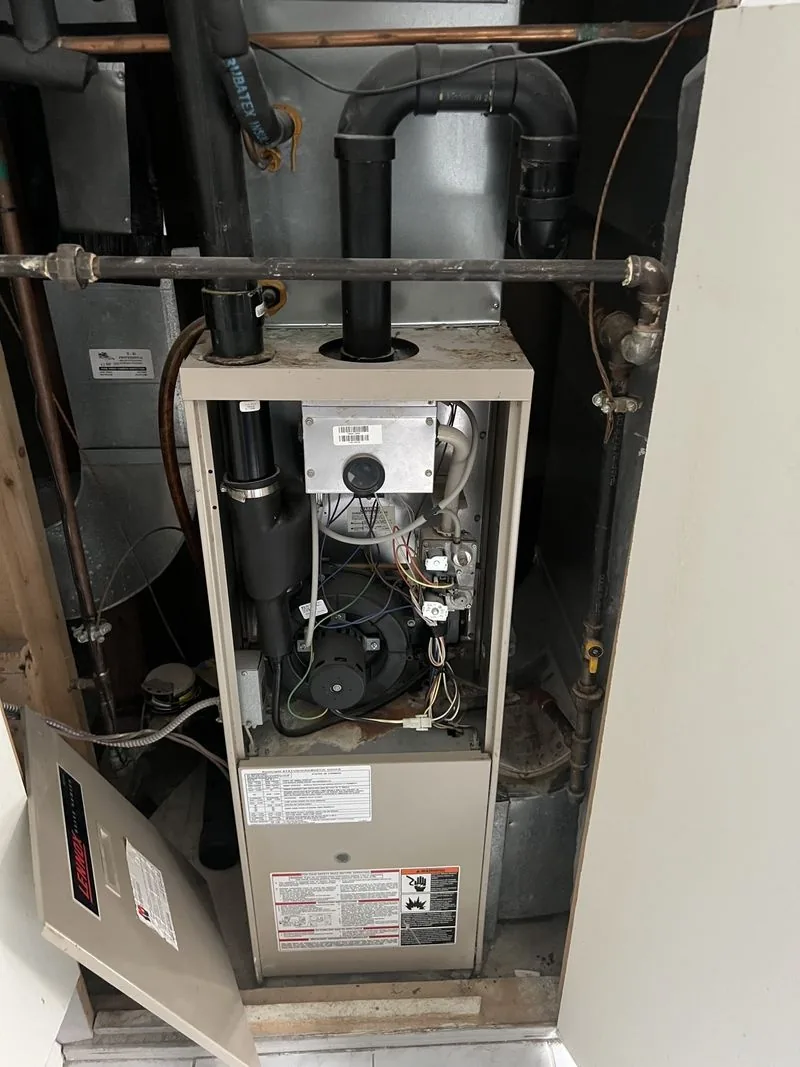
The short version
- Two things are not a troubleshooting job: a gas smell and a carbon monoxide alarm. Get everyone out and call from outside.
- Everything else starts with five checks: the thermostat, the furnace switch, the breaker, the filter and the front panel.
- If the furnace tries to start and then stops, look for the flashing status light and count the flashes before you call.
- Reset it once. A furnace that needs resetting again has a fault, and resetting past a safety shutdown is not a fix.
Two things that are not a troubleshooting job
Almost every no-heat call is a nuisance rather than a danger. Two are not, and they come first.
- You can smell gas. Leave the building. Do not switch anything on or off and do not use a phone inside. From outside, call Enbridge Gas on 1-866-763-5427 or call 911. That line is open 24 hours. Call us once the utility says the building is safe and we will find and fix the gas leak.
- A carbon monoxide alarm is sounding. Get everyone outside and call 911 from there. Do not go back in to look at the furnace.
Ontario requires a carbon monoxide alarm in any home with a fuel-burning appliance, next to each sleeping area, and from 1 January 2026 on every storey of the house. The province sets out the rules on its carbon monoxide safety page. A furnace, a gas water heater and a gas stove all count.
If neither of those applies, everything below is safe to check yourself.
Five checks that fix most no-heat calls
Do these one at a time and in this order. Give the furnace two or three minutes after each one before you decide it has not worked.
- The thermostat. Set to Heat, not Off and not Cool. Set point a few degrees above the room temperature. Fresh batteries if it takes them. A blank screen is nearly always batteries.
- The furnace switch. There is a switch that looks like a light switch on the side of the furnace or on a joist nearby. It gets knocked off by anyone carrying boxes down the basement stairs. Make sure it is on.
- The breaker. Find the furnace breaker in the panel and look for one that has tripped. Reset it once. If it trips again straight away, stop and call.
- The filter. A blocked filter starves the furnace of air. It overheats, a safety limit shuts the burners down, and you get a system that seems to run and then quits. If you cannot remember the last change, change it.
- The front panel. The blower door has to be properly seated. A switch behind it cuts power to the furnace when the panel is off, which is deliberate.
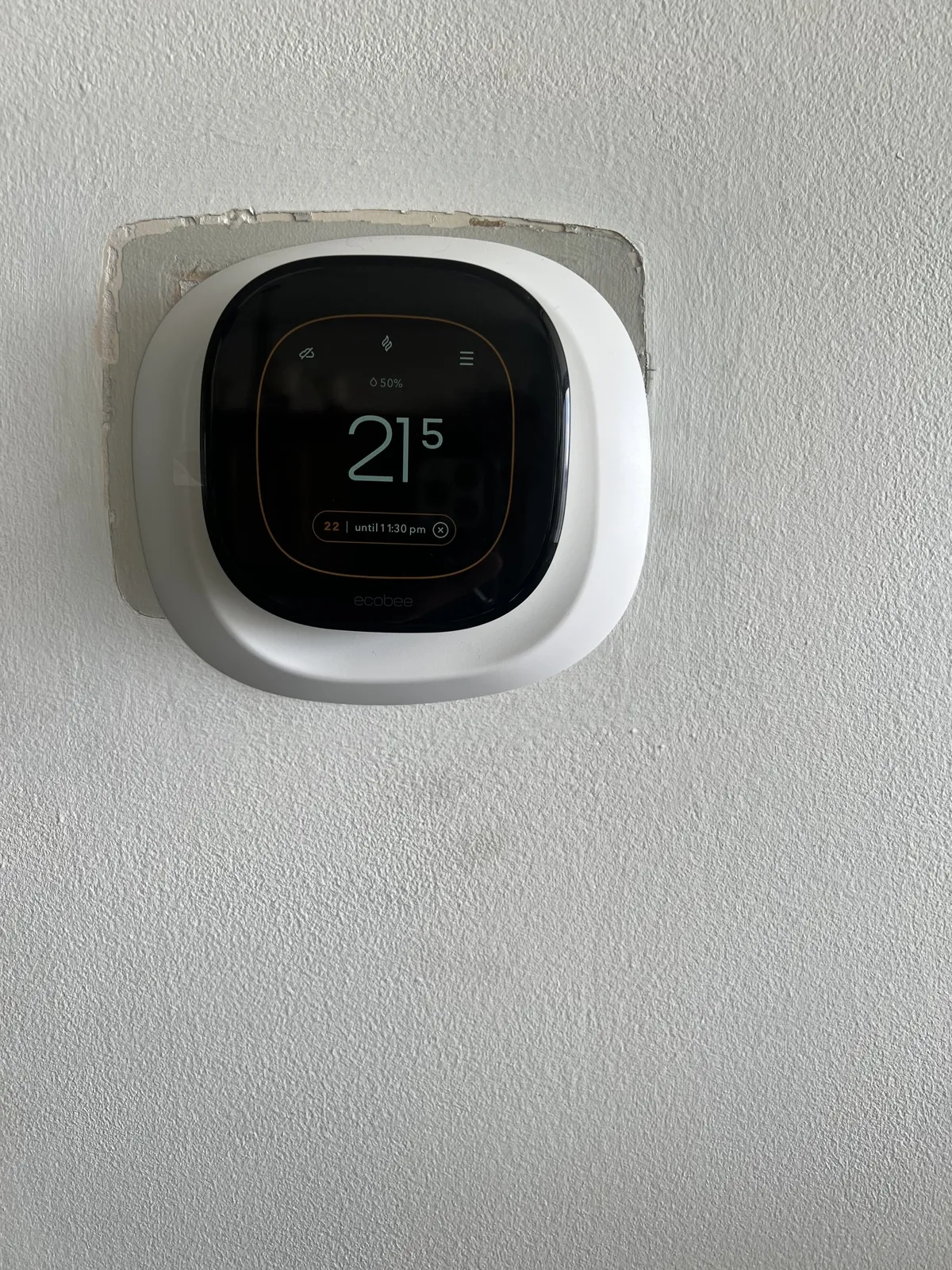
Between them, those five account for a large share of the calls we get on the first cold night of the year.
If the furnace starts and then stops
This is a different problem from a furnace with no power at all, and the furnace will usually tell you about it.
Look for a small window on the front panel with a light behind it. When something is wrong, that light flashes a pattern. Count the flashes and read the label inside the door, which lists what each pattern means for your model.
- Water near the furnace, or a blocked drain. A high-efficiency furnace has white plastic vent pipes and makes condensate. If the drain blocks, a safety switch shuts the furnace off rather than let water back up into it.
- Several ignition attempts, then a long pause. That is a lockout. The usual causes are a dirty flame sensor, a worn ignitor or a gas supply problem.
- The blower runs but the air is cool. The burners are not lighting, or a limit has tripped and the fan is clearing the heat out.
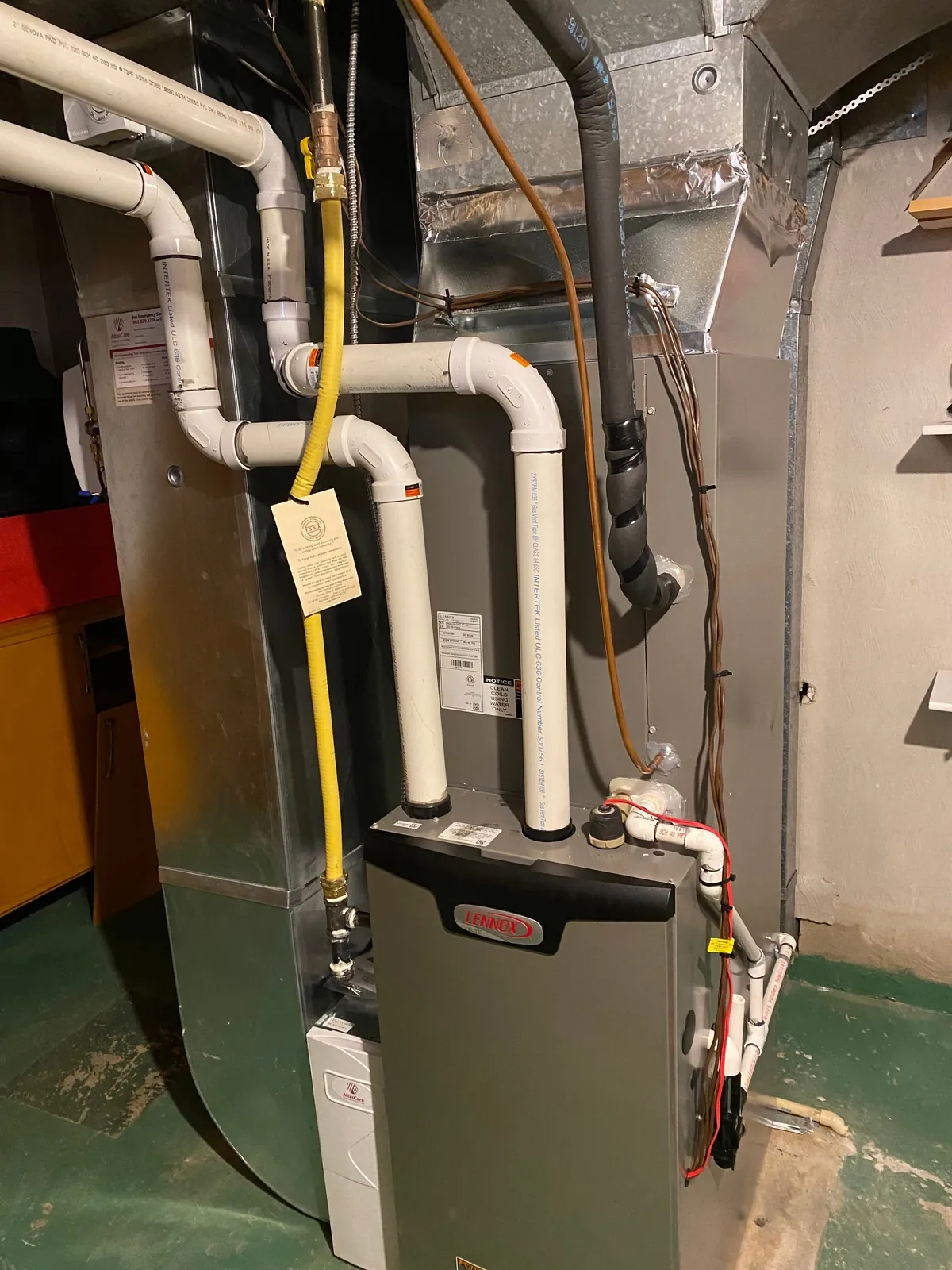
Write the flash pattern down and tell us when you call. It often means the right part is on the truck when we arrive.
Where it stops being a homeowner job
Stop and call if any of these are true.
- You can smell gas, or a carbon monoxide alarm has sounded.
- The furnace locks out again after one reset.
- There is no ignition at all, or you can hear it trying and nothing catches.
- There is a burning smell, a grinding noise, or water pooling under the unit.
- The breaker trips again as soon as you reset it.
- The next step you can see would mean opening the furnace or holding a safety switch closed.
A dead furnace in an Ontario winter is a building problem as well as a comfort one. An unheated house can get cold enough for pipes to freeze, and that costs far more than the furnace repair. Our phone is answered 24 hours a day and no-heat calls are treated as urgent, not held to the next business day.
The visit starts with a diagnostic to find the actual fault rather than guessing at parts. You get the price for any work before it is carried out. If the furnace turns out to be past saving, we will say so.
What to have ready when you call
Four pieces of information turn a diagnostic visit into a shorter one.
- The make and rough age of the furnace, from the label on the cabinet.
- The flash pattern on the status light, if there is one.
- What it actually does: nothing at all, a click and no more, or a start that quits after a minute.
- Whether anything changed first, such as a power cut, a filter change or a new thermostat.
And once the heat is back on, book the annual furnace tune-up. Most of the parts that leave a house cold in January are cheap to deal with in October, and the visit includes the heat exchanger and safety checks that only get looked at when someone is in front of the unit.