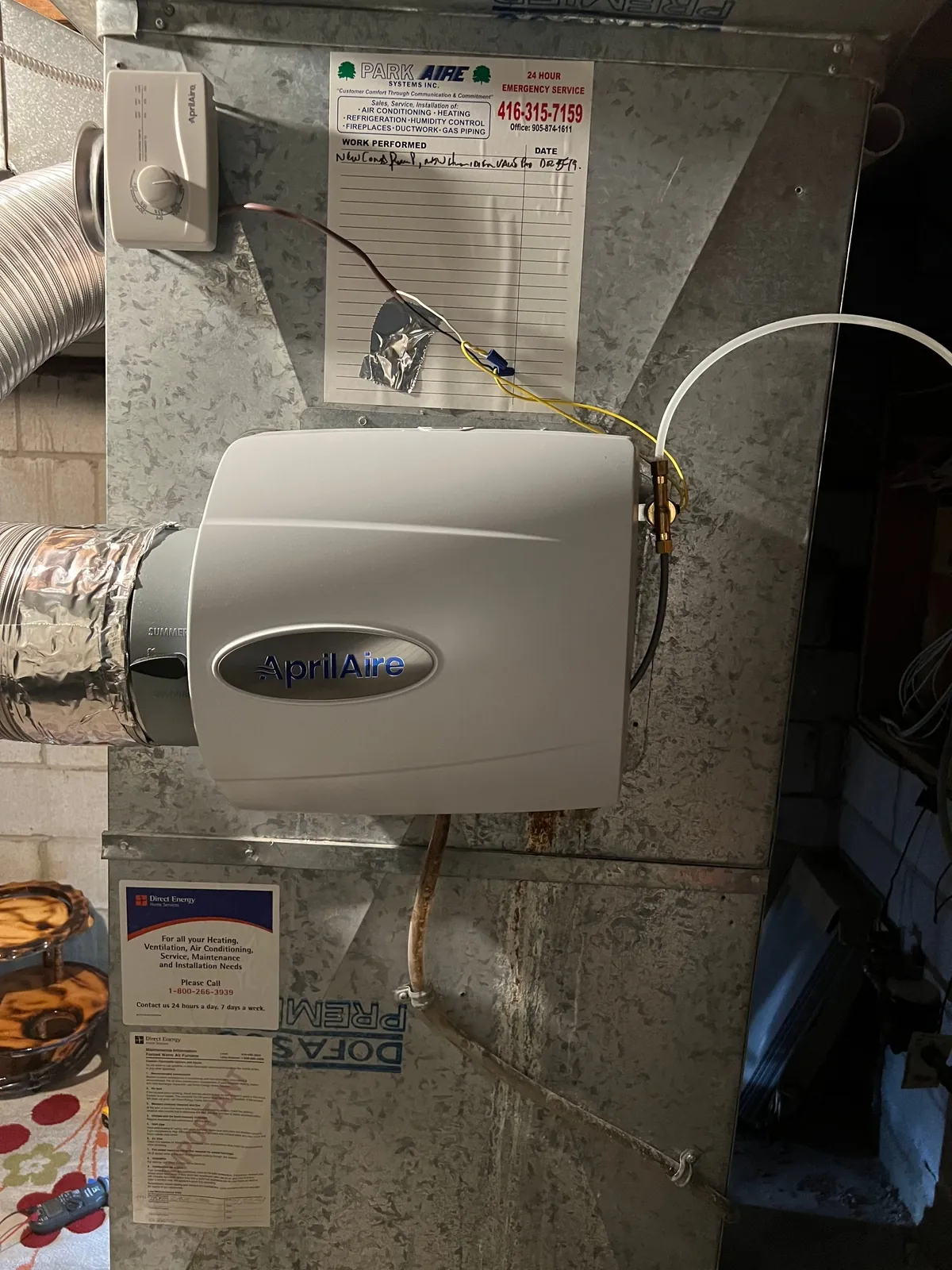
The short version
- A furnace humidifier adds moisture to the air your ducts are already moving, so one unit treats every room the ducts reach and refills itself from the cold water line.
- There are three kinds. Bypass borrows warm air from the furnace and costs the least. Fan powered has its own small fan. Steam makes its own moisture and costs the most.
- On our pricing list a whole home humidifier is $650 + HST installed, or $800 + HST for the larger model.
- It earns its keep in a dry house. It is the wrong purchase for a house whose windows already run wet on a cold morning.
What a furnace humidifier actually does
A furnace humidifier is a small box mounted on the ductwork beside the furnace, fed by a cold water line. When the humidistat asks for moisture, water trickles through a panel inside the box. Air from the system passes through that panel and picks up moisture on the way to your vents.
That is the whole idea. The moisture rides air the furnace is already moving, so every room the ducts reach gets treated from one unit. There is nothing to fill and nothing to move around.
A portable humidifier does the same job out of a tank you fill by hand. It works, and for one bedroom it is fine. It just treats one room, and it stops when the tank runs dry.
The short answer
If you get static off the carpet, wake up with a dry throat and see gaps opening in the hardwood in January, a whole home humidifier deals with all three. If your windows already stream with condensation on a cold morning, your house is not dry and adding moisture will make things worse.
Bypass, fan powered or steam
All three raise the humidity in the whole house. They differ in where the air comes from and how much moisture they can deliver.
| Type | How it adds moisture | Suits |
|---|---|---|
| Bypass | Borrows warm air from the duct and returns it through a bypass duct, using the system fan | Most houses here. Lowest cost, quietest, nothing extra to run. |
| Fan powered | Has its own small fan that blows air across the water panel | Tight spots where a bypass duct will not fit, and houses that need more moisture. |
| Steam | Boils water and sends steam into the supply duct | Large or very dry homes, and systems where the supply air is not hot. |
A bypass unit is the usual choice because it is simple and it has no fan of its own to wear out. The trade off is that it only adds moisture while the system fan is running, so on a mild day with the furnace barely firing it does less. A fan powered unit can run on the fan alone. A steam unit makes its own moisture and does not care how warm the air is.
Can it go on the furnace you already have
Almost always, yes. A humidifier is added to an existing system far more often than it goes in with a new furnace. Four things have to line up.
- Space on the duct. The unit mounts on the plenum or the return beside the furnace, with enough clearance to open the door and pull the panel out.
- A cold water line nearby. It taps into the cold line with a shutoff valve, so the closer that line runs, the less plumbing there is.
- A drain. Flow through models send unused water down a drain line, so there has to be somewhere for it to go.
- A spot for the humidistat. It is wired back to the furnace board and set in winter, and some controls also read the outdoor temperature.
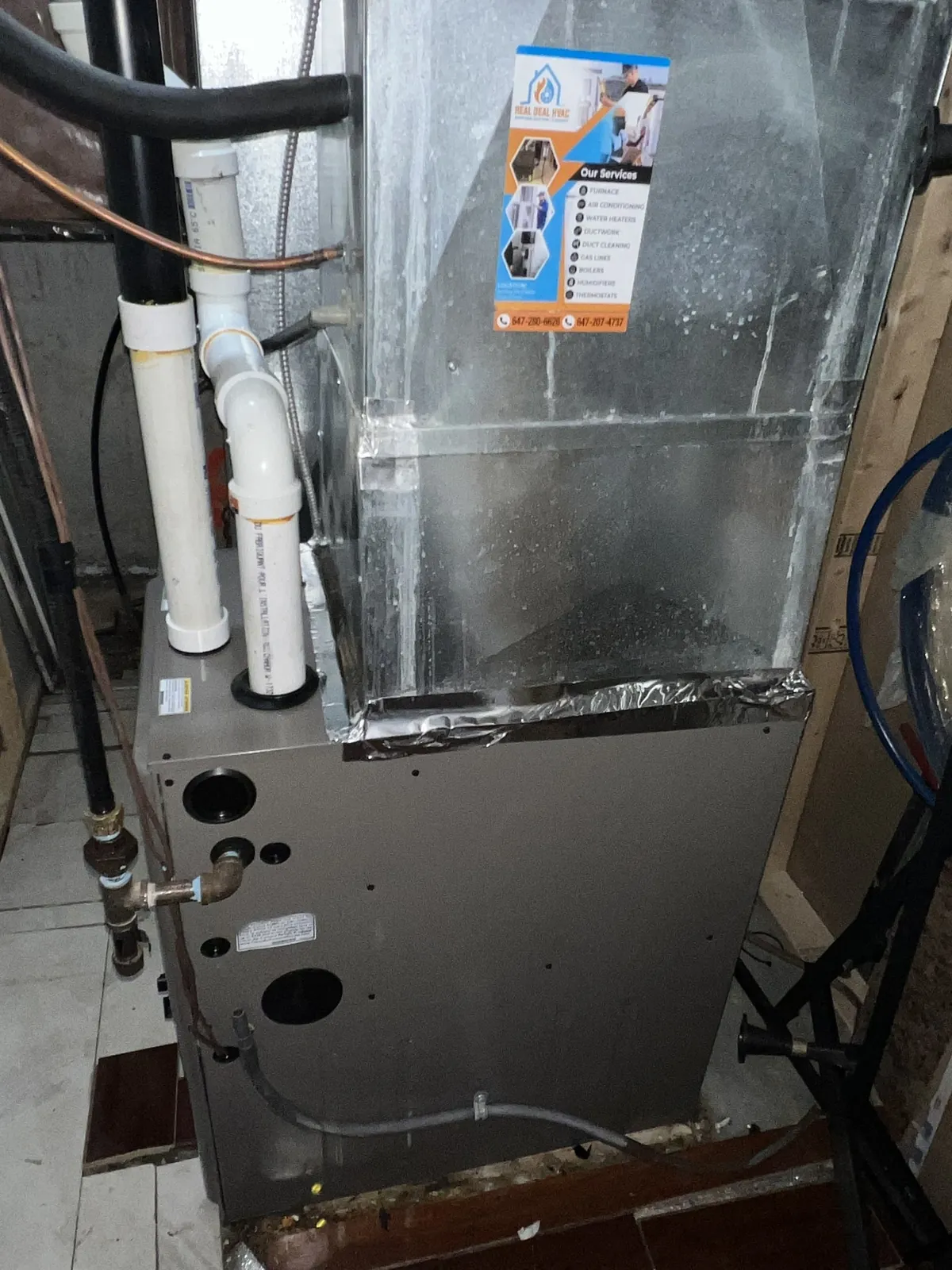
Where it goes is usually decided by the plumbing and the headroom rather than by preference. A finished ceiling right above the furnace is the one case where a fan powered unit earns its extra cost, because it needs no bypass duct looping around the cabinet.
What it costs installed
Our pricing list publishes installed prices rather than ranges. A whole home humidifier is $650 + HST for an Aprilaire 500, or $800 + HST for an Aprilaire 600, with the equipment, the mounting, the water line and the control included.
The larger model is the one to pick for a bigger or leakier house, since a unit that cannot keep up will run constantly and still leave the air dry. Sizing comes from the house, not from the price. Long plumbing runs or an awkward drain can add labour, and the quote is confirmed in writing before any work starts. Financing is available from $42 a month on qualifying installs.
Against that, a dry winter is not free either. Hardwood that shrinks and trim that opens at the joints cost more to put right than the humidifier does.
What it needs every year
This is the part people skip, and it is why some homeowners decide a humidifier was not worth it. The unit needs about twenty minutes of attention a year.
- Change the water panel once per heating season. That is the manufacturer's own interval for the common panels. Where the water leaves heavy scale, look at it mid winter as well.
- Check the water line and the drain. A saddle valve that weeps or a drain line that has silted up both show themselves as a damp patch on the floor.
- Shut it down in spring. Turn the humidistat off, close the water valve, and on a bypass unit close the damper on the bypass duct so cooled air does not run through it all summer.
- Open it back up in the autumn. New panel, water back on, humidistat set for the season.
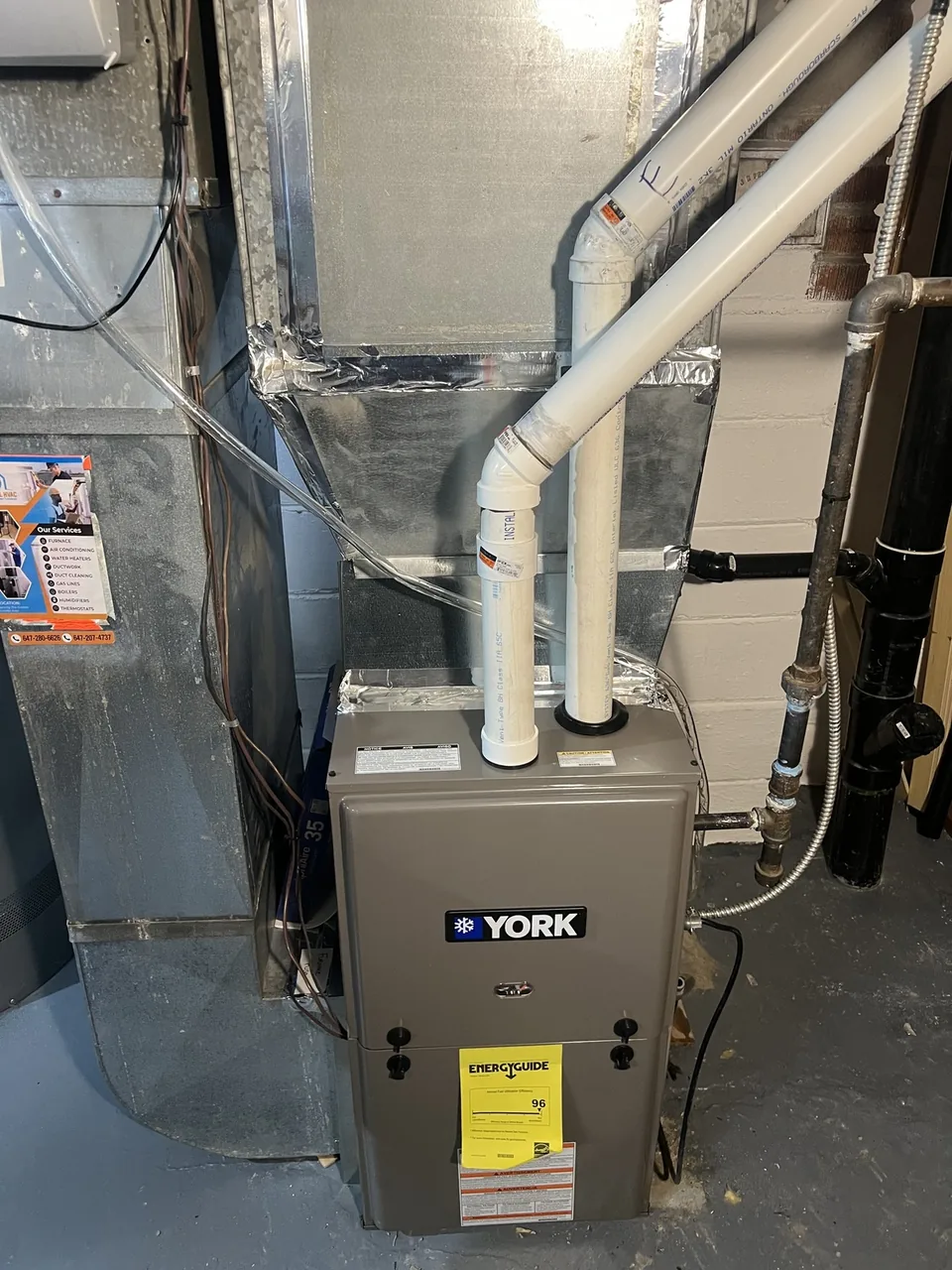
We do all of it as part of a furnace tune-up, which is the simplest way to make sure it happens. A panel left in for three seasons turns hard with mineral and the unit quietly stops adding much moisture at all.
When a house does not need one
A humidifier is the right answer for a dry house and the wrong answer for a damp one. Put a cheap meter in the hallway before you spend anything.
- The windows already run wet in January. The house is holding more moisture than the cold glass can take. Adding more causes mould on the frames.
- The basement smells damp. Deal with that first. A humidifier will not help and may make it worse.
- The meter reads in the forties all winter. The house is fine. Save the money.
- There are no ducts. A boiler or a ductless system has no air stream to add moisture to, so this is not the fix.
If you are not sure which way your house leans, our guide to the right humidity level in a house walks through the numbers and what the windows are telling you. Tell us what your meter says on a cold morning and we will tell you whether a humidifier is worth it in your house.