The short version
- A tank keeps 40 to 75 gallons hot all day and can run out. A tankless unit heats water as it flows and never runs out, but the flow rate is finite.
- On our pricing list a conventional vent tank starts at $1,950 + HST installed. A tankless unit starts at $3,750 + HST, and the gas and venting work is what usually adds to that.
- Tankless is the better buy when floor space matters, when hot water keeps running out, and when you have time to plan the work.
- A tank is still the sensible choice for most straightforward replacements, especially when the old one has died and you want hot water back today.
What each one actually does
A hot water tank is a steel cylinder with a gas burner underneath. It keeps the water it holds hot all day, whether you use it or not. Open a tap and hot water leaves the top while cold water enters the bottom. Run enough and you reach the end of the tank and it turns cold.
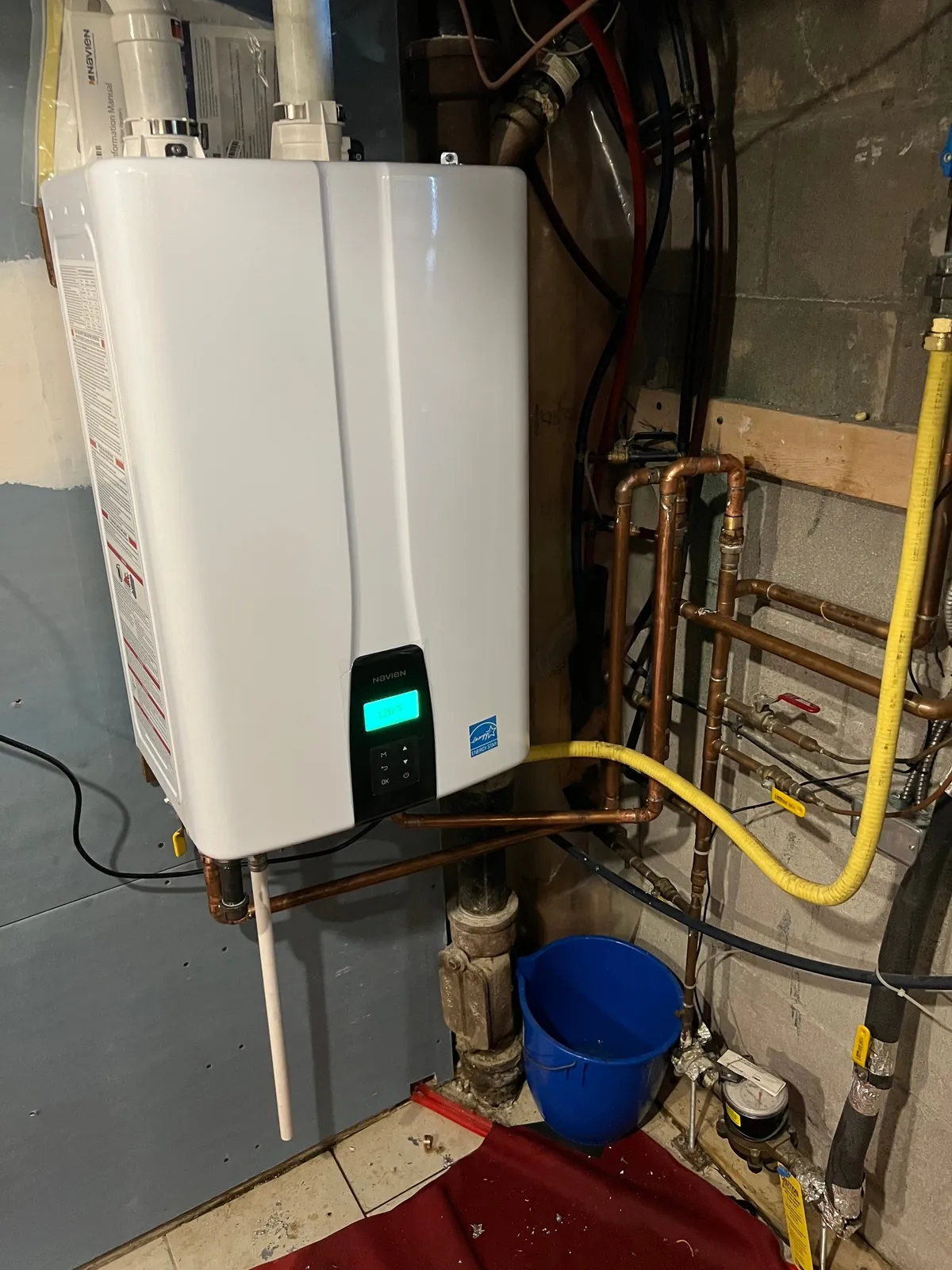
A tankless water heater has no storage. It hangs on the wall, and when you open a hot tap it fires a burner and heats the water as it passes through. Close the tap and it shuts off. Nothing is kept hot, so no gas is spent keeping it hot.
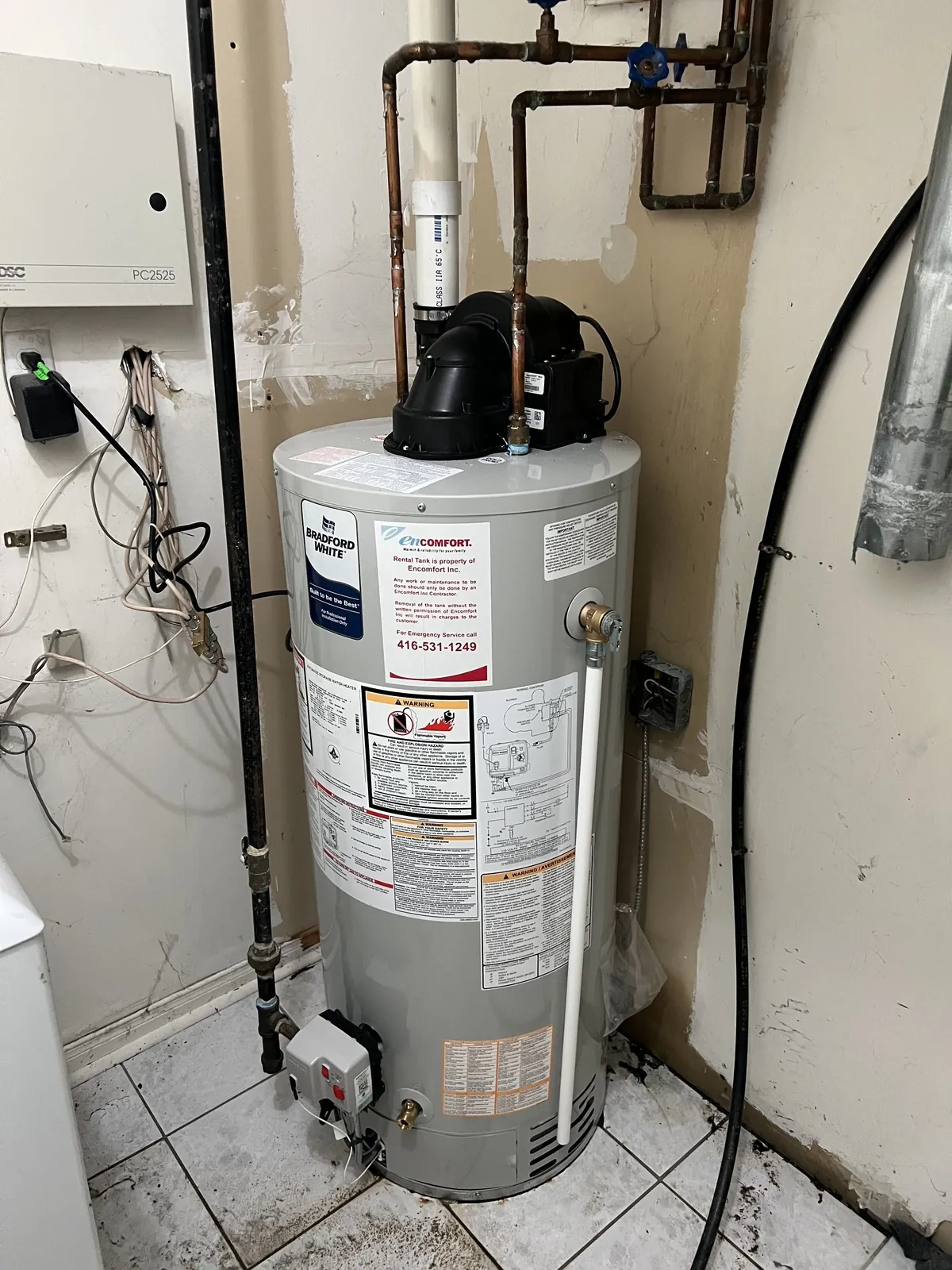
That is the whole difference. A tank can run out, but while it has water in it, it delivers a lot at once. A tankless unit never runs out, but there is a ceiling on how fast.
What each one costs installed
Most companies publish a range here. Our pricing list publishes the ticket price, with equipment, installation and removal of the old unit included.
| What you are buying | Installed price |
|---|---|
| 50 gallon conventional vent tank | $1,950 + HST |
| 40 gallon conventional vent tank | $2,100 + HST |
| 60 gallon conventional vent tank | $2,350 + HST |
| 50 gallon power vented tank | $2,250 + HST |
| 75 gallon power vented tank | $3,500 + HST |
| Tankless, Rinnai RX 160 | $3,750 + HST |
| Tankless, Rinnai RX 199 | $4,250 + HST |
The cheapest tankless unit on that list costs more than the largest tank. What widens the gap is the work described below: the gas line, the venting and the condensate drain. Those are quoted separately, which is why two tankless quotes for the same house can differ. Financing is available from $42 a month on qualifying installs.
Running cost goes the other way. A tank reheats water nobody is using. Natural Resources Canada says in its guide to residential water heaters that an ENERGY STAR certified tankless unit can save 30 percent more energy than a standard storage tank. On a gas bill that is a slow payback.
Flow rate is the real limit, and winter makes it tighter
A tank is rated by how much it holds. A tankless unit is rated by how much it heats per minute. That second number decides whether it suits your house, and most quotes skip it.
How hard the unit works depends on how cold the incoming water is. Mains water in Mississauga is far colder in February than in August, so the same unit heats fewer litres per minute in winter than its headline rating suggests. A unit sized on the summer number will let you down in January.
The same guide makes the point: a tankless unit's ability to supply the hot water needed for several uses at once can be limited. That is not a fault, it is how the appliance works. It has to be sized for the way your household uses hot water.
- One bathroom, one or two people: almost any tankless unit will keep up.
- Two bathrooms in use at once, or a shower while the washing machine fills: the unit has to be sized for it deliberately.
- A soaker tub you want filled quickly: a large tank with a head start can beat a tankless unit.
Ask about the sizing, not the brand
A tankless quote should say how many litres per minute the unit delivers with winter inlet water, and which fixtures that covers. If all it names is a model number, ask for the rest before you sign.
What a tankless install involves that a tank swap does not
Swapping a tank for a tank is usually a two to four hour job. The new tank stands where the old one stood, the water and vent connections are already there, and you have hot water the same day.
Going tankless is a bigger change, because the two appliances burn gas at very different rates. A typical 50 gallon gas tank fires at around 40,000 BTU per hour. A Rinnai RX 160 fires at up to 160,000, and the RX 199 at up to 199,000. The gas line that fed the tank often cannot supply that.
- Gas line. The run back to the meter usually needs upsizing. This is the most common extra cost, and it is work for a licensed gas fitter.
- Venting. A tankless unit needs its own venting rather than the old tank's flue, normally through a new hole in an exterior wall.
- Condensate. A condensing unit produces acidic condensate and needs a drain for it.
- Isolation valves. These let the unit be descaled later without cutting pipe.
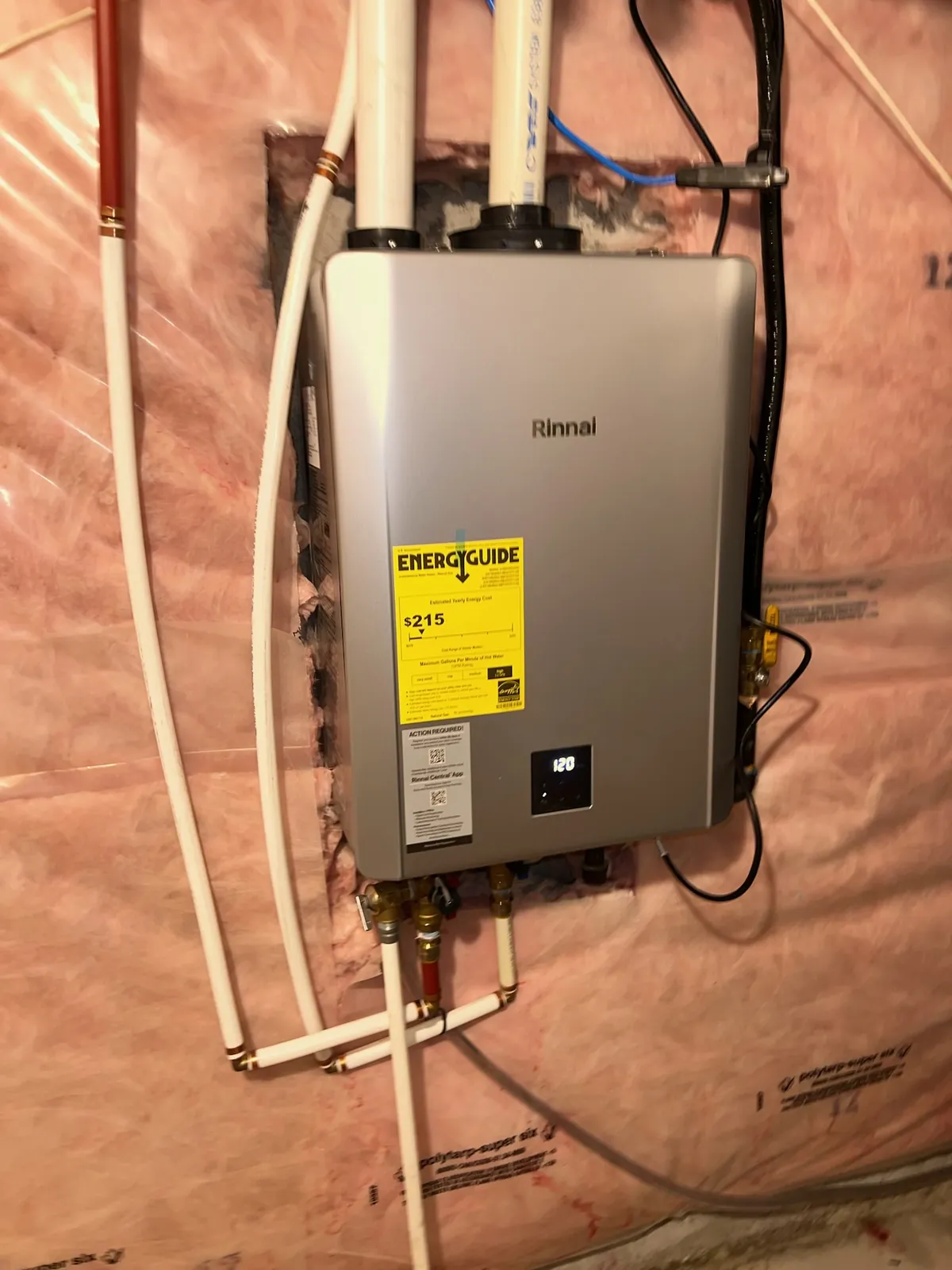
Maintenance differs too. A tankless unit needs annual descaling so mineral buildup does not restrict the heat exchanger. A tank needs flushing, a simpler job. Skip either and you will not get the service life you paid for.
One difference people only meet in an ice storm: a tankless unit needs electricity for its controls and fan, so a power cut means no hot water. A power vented tank is the same. A conventional vent tank with a standing pilot carries on, and any tank still holds what it already heated.
Which one suits your house
This is how we advise people standing in their own basement.
- The tank died this morning. Replace it with a tank. Lowest cost, no gas or venting work, hot water today. Go tankless at the next replacement, with time to plan it.
- The utility room is tight. A wall-hung unit gives back the floor space the tank occupied, which matters in a small basement or a townhouse closet.
- You keep running out of hot water. A correctly sized tankless unit fixes that for good. So does a bigger tank, for less money, so price both.
- You are selling within a year or two. A tank is the cheaper way to leave the house in good order.
- You plan to stay fifteen years or more. A tankless unit normally outlasts a tank, so the extra cost has time to work.
For a straight answer on your own house, tell us how many bathrooms you have, how many people live there, and where the current unit sits. We will tell you which one we would put in our own home, with the price agreed in writing first.